Introduction:
In the contemporary world, which is accompanied by the rapid expansion of communications and inter-national ties, the necessity of dialogue, mutual understanding, and cultural synergy among human societies has acquired unprecedented importance. Recognition of and respect for cultural diversity and differences is the cornerstone of achieving lasting peace and all-round development.
On this basis, The International Institute for Proximity of Cultures was established in 2018, relying on the scientific capacities of elites, intellectuals, and experts in cultural, social, and international fields, in order to take an effective step in this direction.
Mission and Objectives:
This institute has founded its mission on three fundamental axes:
– Promotion of cultural discourse: expanding the culture of intercultural dialogue among nations;
– Facilitating knowledge-based exchanges: paving the way for scientific, cultural, and artistic exchanges at regional and global levels;
– Creating a foundation for mutual understanding: providing the ground for respect for differences in order to strengthen convergence and peaceful coexistence.
The ultimate goal of the institute is to play an active and pioneering role in cultural diplomacy and to develop constructive interactions among reference cultural institutions throughout the world.
Axes of Activity and Measures: The International Institute for Proximity of Cultures pursues its activities through two scientific-cultural approaches:
– Scientific and research approach: focusing on implementing joint research projects and cooperating with academic and scientific centers inside and outside the country.
– Cultural approach: centered on holding conferences, brainstorming sessions, and creating a space for interaction among regional and international elites and academics.
Since its establishment until now, this institute has recorded more than 40 significant cultural and scientific events in its record, some of whose titles are mentioned:
- A) Scientific and Research Activities:
Holding more than 20 scientific and specialized sessions with the presence of prominent professors and experts in cultural and international studies (inside and outside the country) to explain and promote the objectives of the institute.
- B) Cultural Activities (International Conferences and Sessions):
– International Conference on the Convergence of Cultures, the Foundation of Peace and Development: with the presence of political and cultural officials and elites from 17 countries; International University of Kyrgyzstan (Bishkek), October 2018
– International Conference on “The Convergence of Cultures in the Shadow of the Holy Qur’an”: Kazakhstan University, May 2018.
– International Conference on “The Civilizing Teachings of the Great Prophet (PBUH)”: Faculty of Theology, University of Tehran, April 2022.
– Iran-Kazakhstan Bilateral Conference on “Convergence of Cultures and Regional Integration”: Almaty University, 2019.
– International Conference on “Islamic Diplomacy with Emphasis on the Conduct of the Great Prophet (PBUH)”: Faculty of Theology, University of Tehran, May 2023
– Conference on “Peaceful Coexistence”: with the participation of the Faculty of Theology, University of Tehran, Allameh Amini Hall, 2022.
– Conference on “The Role of Cultural Diplomacy in the Economic Development of Free Zones”: International Conference Hall of the Islamic Republic of Iran Broadcasting (IRIB), October 2024. (This event was held with the presence of more than 800 economic and cultural managers, university professors, producers, and prominent domestic and foreign activists.)
– International Conference on Arbaeen; Manifestation of Soft Power in Global Equations”: held in four stages over 4 consecutive years.
– Holding a training workshop for Afghan women entrepreneurs: February 2025.
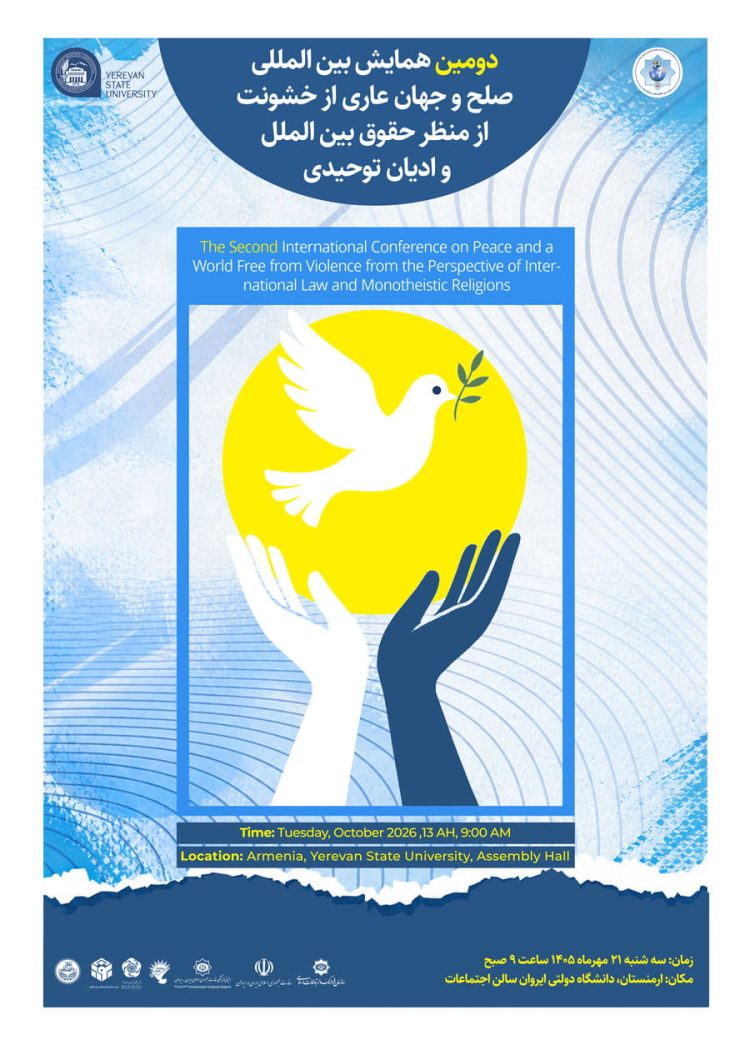
– International Conference on a World Free from Violence in Legal Principles and Shared Cultural Values”: 21 December 2025, Sheikh Morteza Ansari Hall (Faculty of Law and Political Science, University of Tehran); with the presence of thinkers from 9 countries of the world.
- Artistic and Cultural Programs:
– Holding a series of specialized sessions on “Music of Peace and Justice”: from early 2024 to autumn 2024; with the presence of 37 musicians, composers, singers, and prominent music researchers. The purpose of these sessions was to explain the unique capacities of art in strengthening human solidarity and promoting peace.
– Celebration and Cultural-Artistic Festival of the Ten-Day Dawn of the Islamic Revolution”: held in the city of Kapan (Armenia), 7-8 February 2026; including the setting up of an exhibition of artworks, handicrafts, cultural products, and the introduction of Iranian culinary culture.
– And other programs.
Vision and Horizons:
The vision and horizons ahead of the International Institute for the Convergence of Cultures, with a view to the future, has outlined its mission along the path of all-round expansion of activities. The institute’s vision is to go beyond current borders and expand the circle of activities into new scientific, artistic, media, and economic fields at an international level, in such a way that it can become an inclusive platform for dynamic exchanges among nations.
Conclusion and Achievements:
During its years of activity, this institute has succeeded, by holding dozens of trend-setting events, in playing a pioneering role in expanding cultural diplomacy and strengthening regional convergence.
The continuous and active presence of thinkers, university professors, and artists from various countries in the institute’s programs is evidence of the growing position and credibility of this institution in the arena of international interactions. Today, the “The International Institute for Proximity of Cultures” with the continuation of its strategic programs, is recognized as one of the executive arms of cultural diplomacy, which, relying on shared values, steps along the path of peace and peaceful coexistence.
International Institute for Proximity of Cultures