
Attack on Historical and National Identity: The Gendarmerie Building of Tehran
The former headquarters of the National Gendarmerie was one of the most prominent historical landmarks in Tehran. This building was located on South Kargar Street, in the Amir Abad district near Enghelab Square in central Tehran; it dated back to the late Qajar era. During this period, modern security and law enforcement institutions first entered Iran, and the construction of this building began as part of that. It continued to serve as a security and police facility during the Pahlavi dynasty as well.
Due to its historical significance, architectural style, and substantial role in Iran’s contemporary history, the Gendarmerie building is regarded as one of the country’s important national and historical heritage sites. It stood as a living document, reflecting the early formation of modern administrative and public institutions in Iran. A nostalgic structure, it held a distinctive presence among the many sites of central Tehran and was considered one of the city’s iconic symbols.
An old photograph of the Gendarmerie building on 30-metre Street (now South Kargar) in central Tehran.
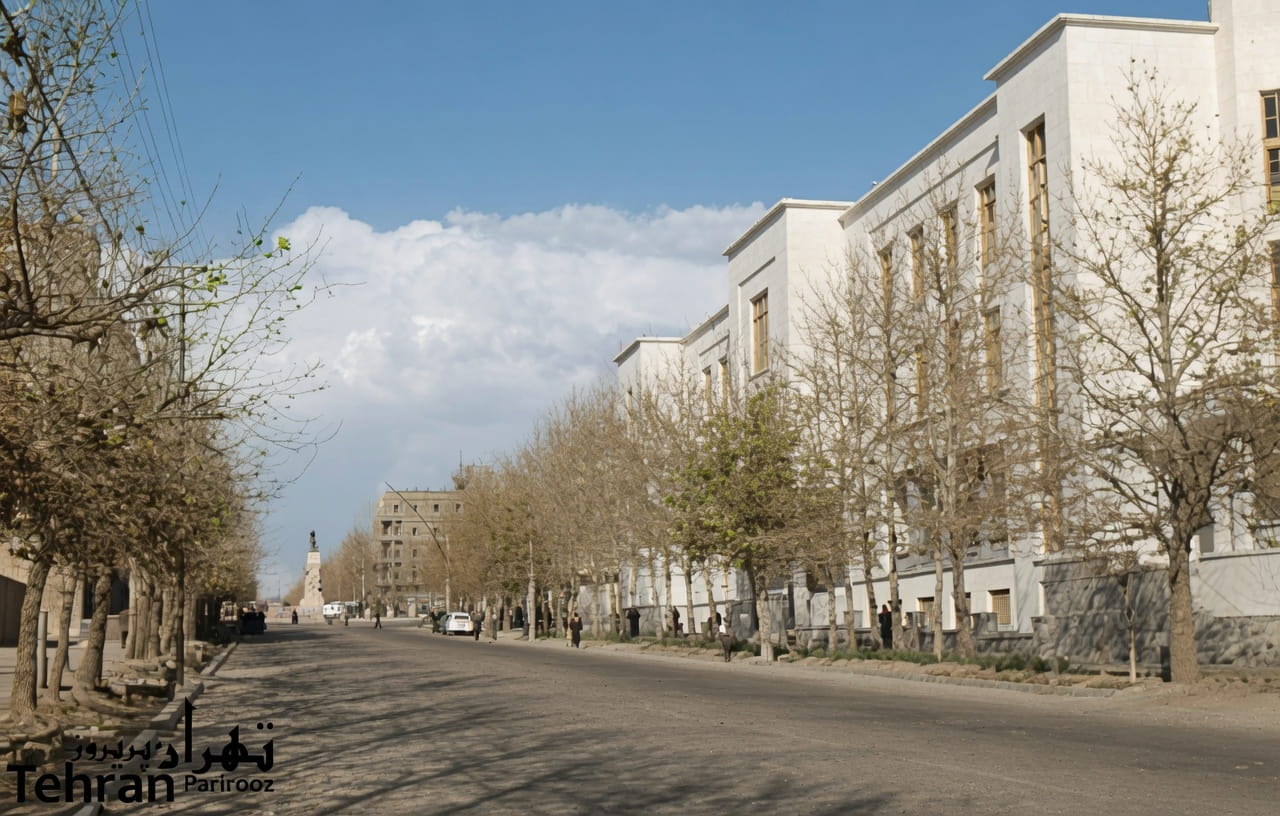
In March 2026, South Kargar Street was subjected to aerial attacks by the United States and Israel, destroying the historic and nostalgic Gendarmerie building. This occurred despite international laws and regulations, such as the 1954 Hague Convention (1) and its Additional Protocols, as well as the Additional Protocols to the four Geneva Conventions (2) and Customary rules of International Humanitarian Law (3), all of which emphasize the protection of cultural heritage and historical monuments during armed conflicts.
Under international law, only military necessity and the military use of these sites can justify an attack. It has been argued that a police center was the target, and some have attempted to justify the building’s destruction on that basis. However, police forces, while involved in public services and maintaining order and security, do not qualify as legitimate military targets and are not considered combatants. As a result, under the principle of distinction, an attack on them is unlawful. Therefore, the destruction of this building cannot be justified, even under the exceptions mentioned.
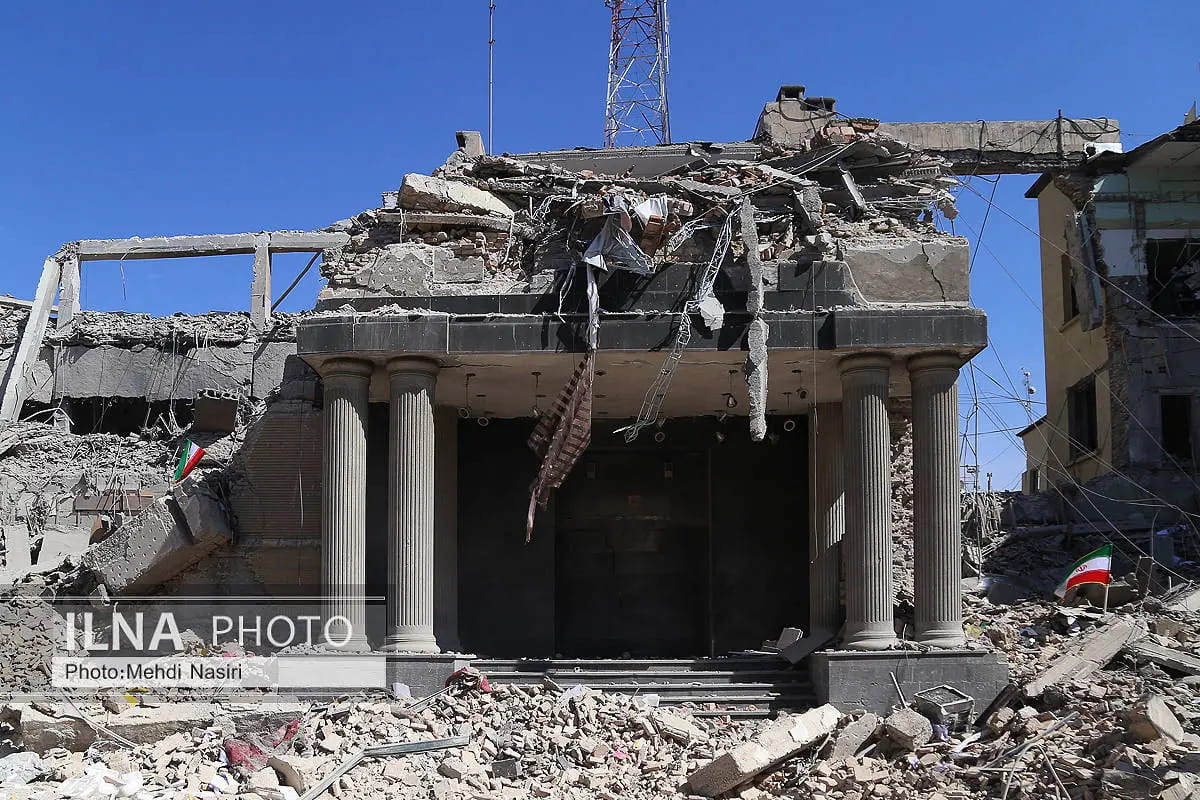
A noteworthy video shows the condition of this building in late July. Due to the intensity of the attack, no trace of the structure remained, and mechanical bulldozers were left with no choice but to clear away the remaining debris.
An image of the building after the attack during the Forty-Day War (Iranian Labor News Agency)
- Convention for the Protection of Cultural Property in the Event of Armed Conflict. The Hague, 14 May 1954, https://ihl-databases.icrc.org/en/ihl-treaties/hague-conv-1954/article-1a?activeTab=
- Additional Protocol to the Geneva Conventions of 12 August 1949, https://ihl-databases.icrc.org/en/ihl-treaties/api-1977/article-53.
- Customary rules of international humanitarian law, https://ihl-databases.icrc.org/en/customary-ihl/v1/rule38#Fn_6C052F02_00002.