


Introduction
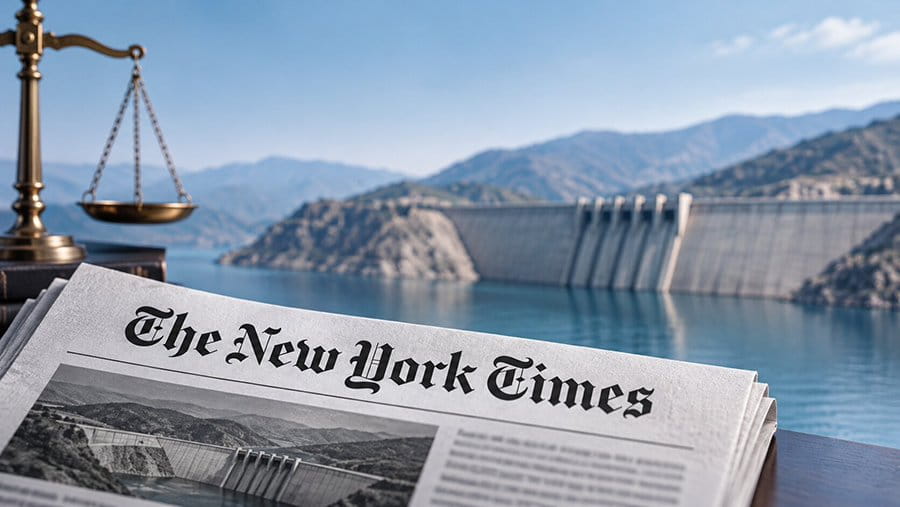
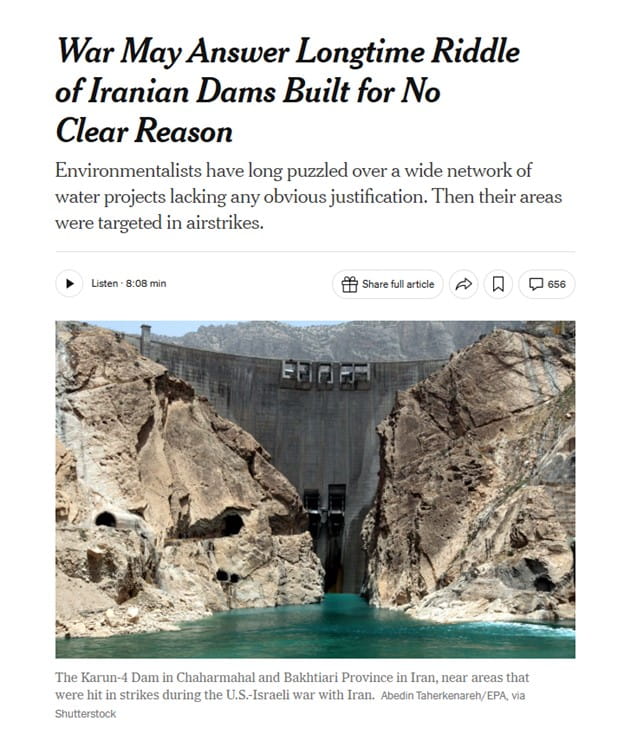
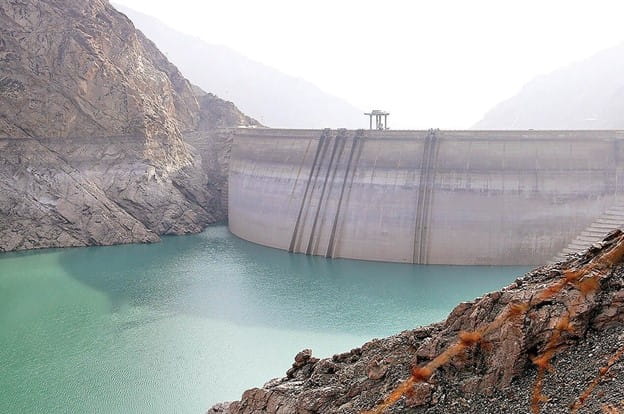
On 16 November 2026, The New York Times published a report titled “War May Answer Longtime Riddle of Iranian Dams Built for No Clear Reason,” written by Sanam Mahoozi and Erika Solomon (1). The report states that, over the course of decades, Iran has built an extensive network of dams, pipelines, and water-transfer projects, particularly in areas with no clear economic or agricultural need. It is further claimed that environmental and water researchers had for years regarded this matter as a puzzle, and quotations from certain individuals are also presented.
The report claims that, upon examining the map of US and Israeli airstrikes this year on suspected Iranian missile facilities, one notices a strong similarity between this pattern and the map of the distribution of dams. The report quotes seven water and military experts who suggest that positioning extensive military facilities near dams—which provide a stable supply of water and electricity—is intended to reduce the Iranian military and missile facilities’ dependence on the national water and power grid. This would allow military facilities to operate without interruption, even if the national electricity or water grid is disrupted. In essence, the report conveys that infrastructure like dams and water-transfer networks possess a dual-use character and are being exploited for military purposes, which explains the high number of dams in Iran. However, The New York Times simultaneously asserts in this report that the issues it raises are purely speculative.
Criticism by Environmental Experts
The report drew widespread criticism; even experts whose views were cited in it reacted negatively. Kaveh Madani (Director of the United Nations University Institute for Water, Environment and Health) wrote in a post on the social media platform X: “Speculation is not evidence. Spatial proximity is not causality” (2). He also wrote in a Forbes article that the mere observation of geographic proximity between two types of facilities cannot prove that dams were built to support missile sites. He emphasized that even governments that have attacked Iran have not put forward such a connection as a basis for justifying their attacks. Many dams and military facilities are located in mountainous regions. Geological and topographic characteristics, access to water, and natural conditions can explain why both types of facilities are sited in similar areas. Therefore, this overlap does not necessarily carry a military meaning. He notes that the presentation of such narratives places vital water infrastructure at risk (3). Nima Shokri, a water researcher at the Hamburg University of Technology, whose research was referenced in The New York Times report, likewise states that the proximity of dams to military targets does not establish why those dams were built, nor does it justify attacks on them (4).

A Critique from a Human Rights Perspective
Under human rights standards (including Article 19 of the International Covenant on Civil and Political Rights), although the right to freedom of expression is recognized (5), this does not amount to a license to violate the rights of others or to disseminate misleading information. Indeed, where there is a risk of disrespect for the rights or reputations of others, or where public health, national security, public order, or morals are at issue, States retain the right to impose restrictions. Article 20 of the International Covenant on Civil and Political Rights also prohibits war propaganda, a provision that must be considered alongside Article 19. To determine whether the report constitutes an instrument of incitement to war, attention must be paid to the nature of its content, its purpose, the context of its publication, and its relationship to the encouragement of war. Reports such as that of The New York Times can be instrumentalized to justify acts of aggression. In today’s world, where even the flimsiest of pretexts is advanced for the most severe hostile actions, such reports can readily provide a basis for justifying the policies of great powers.

A Critique from the Standpoint of Journalistic Standards
In its handbook “Journalism, ‘Fake News’ & Disinformation: Handbook for Journalism Education and Training,” UNESCO sets out professional standards in the field of journalism and the press (6). According to this handbook (pages 21-24), the fundamental principles of professional journalism are accuracy, independence, fairness, confidentiality, humanity, accountability, and transparency. Within this framework, serious questions arise regarding The New York Times report:
- Has the claimed connection between dams and military/missile facilities been established with sufficient evidence?
- Has the report been influenced by the political and security frameworks of the conflict’s parties?
- Have the views of independent experts and alternative explanations been adequately reflected?
- Have confidential sources and information been properly managed?
- Has due consideration been given to the possible effects of publishing this narrative on civilian safety and lives?
- Following experts’ objections, has the newspaper provided the necessary clarification and correction?
- Have the research methodology, sources, and data limitations been adequately explained?
The handbook (pages 88-99) outlines requirements for verifying claims by consulting credible sources and primary evidence, and for fact-checking information, images, data, and sources before publication. This raises several questions: Were the statements of experts who later criticized the newspaper’s interpretation of their research accurately reflected in the report? Is the mere spatial overlap between dams and military facilities sufficient to establish a functional relationship between them?
It should be noted here that even the absence of a specific, deliberate intent to disseminate false information does not exempt journalists and reporters from accountability, because even data that contain accurate information of public value may be intermingled with inaccurate information and, as a result, may lead a reporter to publish a misleading narrative. This matter assumes great importance during a war or a broad political crisis. In the context of the hostile situation between Iran and the United States, has The New York Times exercised the requisite professional diligence in examining the provenance of its data, the motives of its sources, the possibility of being influenced by information supplied by the parties to the conflict, and the potential consequences of publishing the report? Under the principle of humanity, a journalist must consider the effects of publishing content on people’s lives and take the public interest as the guiding criterion (page 28). This principle takes on added significance with respect to reports that may present a country’s vital infrastructure, in wartime conditions, as military installations.
A Critique from the Perspective of International Humanitarian Law
The New York Times report speaks of the dual use of facilities and infrastructure. Does dual use, under the law of armed conflict, permit an attack on a target? Under Article 52(2) of Additional Protocol I to the four Geneva Conventions, an object is a military objective when, “by its nature, location, purpose or use, it makes an effective contribution to military action and its destruction, capture or neutralization offers a definite military advantage.” The geographic location of dams and their proximity to missile and military facilities does not, in and of itself, establish the aforementioned conditions. Moreover, paragraph 3 of the article under discussion provides that, in case of doubt as to whether an object normally dedicated to civilian purposes is being used to make an effective contribution to military action, it shall be presumed not to be so used (7). In this respect, dual use and geographic proximity cannot be equated with the military character of a target. This rule is important for water infrastructure, whose primary functions are the supply of drinking water, agriculture, and energy production.
Under Article 54 of Additional Protocol I as well, it is prohibited to attack objects indispensable to the survival of the civilian population, such as foodstuffs, agricultural areas for the production of foodstuffs, crops, livestock, drinking water installations and supplies, and irrigation works, whatever the motive (8). Under Article 56 of Additional Protocol I, dams, as works or installations containing dangerous forces, also enjoy special protection, and any attack on them is prohibited even when they constitute military objectives (9). Under this article, the cessation of this protection requires the fulfilment of cumulative conditions. In effect, the dam must be used for other than its normal function, must be employed in regular, significant and direct support of military operations, and an attack on it must be the only feasible way to terminate such support. Where doubt exists and the information rests on hypothesis and conjecture, any attack will be prohibited. Attacks carried out in disregard of these rules may threaten the civilian population’s life and survival. Violations of international humanitarian law in this respect can be characterized as war crimes. Therefore, one cannot readily overlook the possible criminal, social, and moral responsibility of media outlets and newspapers that, in one way or another, incite or justify such violations of international law.

The New York Times Report as a Familiar Pattern from the Past
The publication of The New York Times report recalled narratives advanced in connection with the warmongering policies of recent decades — narratives in which this very newspaper has a clear track record. A well-known example of erroneous information infiltrating reputable media is the case of Judith Miller and The New York Times’ coverage of Iraq’s weapons. In September 2002, Miller, citing American officials, published the claim that Iraq was seeking to acquire nuclear weapons through aluminum tubes. This claim, which Dick Cheney invoked to justify the Iraq War, was later discredited. A year after the war began, The New York Times acknowledged serious shortcomings in its reporting, including its reliance on Iraqi defectors and exiles motivated by regime change (10). This case demonstrates how reputable media, by publishing unverified claims and relying on politically motivated sources, can become instruments for amplifying misinformation and paving the way for political decisions. It should be noted that, with respect to the Balkan wars of the 1990s as well, there were numerous instances of the dissemination of misleading information, and the existing examples are not confined solely to the wars of the Middle East.
What Can Be Understood
The New York Times report constructs a speculative narrative, relying solely on the geographic overlap between dams and missile facilities without offering functional evidence. This approach is inconsistent with professional journalistic standards and could lay the groundwork for justifying attacks on water infrastructure. Such a narrative could be intended to create conditions for exerting greater pressure on civilian populations and destabilizing the supply of vital necessities in Iran. Furthermore, it appears to be a narrative-building exercise aimed at creating a rift between the armed forces and the populace by insinuating that military personnel use vital infrastructure as cover for military installations.
In any case, silence in the face of the presentation of such narratives carries serious consequences, because a pattern of it can be observed in the past—a pattern that has been exploited by warmongering politicians to justify hostile actions.
- Mahoozi, S., & Solomon, E. (16 November 2026). War may answer longtime riddle of Iranian dams built for no clear reason. The New York Times. https://www.nytimes.com/2026/11/16/world/europe/iran-dams-missile-sites-environmentalists.html. Last Seen 18 November 2026.
- Madani, K. [@KavehMadani]. (2026, November 16). https://x.com/KavehMadani/status/2122402074096742414?a=OHLDF3h4YrT7I3pAnW4&s=19. Last Seen 18 November 2026.
- Kaveh Madani, The Dangerous Logic of Linking Iran’s Dams to Missiles, Forbes, 17 November 2026. https://www.forbes.com/sites/kavehmadani/2026/11/17/the-dangerous-logic-of-linking-irans-dams-to-missiles. Last Seen 18 November 2026.
- Al Jazeera, Why has an NYT report on Iran’s dams ignited fierce pushback?, 18 November 2026. https://www.aljazeera.com/news/2026/11/18/why-has-an-nyt-report-on-irans-dams-ignited-fierce-pushback. Last Seen 18 November 2026.
- Article 19 of the International Covenant on Civil and Political Rights 1966. https://www.ohchr.org/en/instruments-mechanisms/instruments/international-covenant-civil-and-political-rights. Last Seen 19 November 2026.
- Journalism, ‘Fake News’ & Disinformation: Handbook for Journalism Education and Training. (2018). https://unesdoc.unesco.org/ark:/48223/pf0000265552. Last Seen 18 November 2026.
- Article 52 – General protection of civilian objects. Protocol Additional I to the Geneva Conventions of 12 August 1949. https://ihl-databases.icrc.org/en/ihl-treaties/api-1977/article-52. Last Seen 19 November 2026.
- Article 54 – Protection of objects indispensable to the survival of the civilian population. Protocol Additional I to the Geneva Conventions of 12 August 1949. https://ihl-databases.icrc.org/en/ihl-treaties/api-1977/article-54?activeTab=. Last Seen 19 November 2026.
- Article 56 – Protection of works and installations containing dangerous forces. Protocol Additional I to the Geneva Conventions of 12 August 1949. https://ihl-databases.icrc.org/en/ihl-treaties/api-1977/article-56?activeTab=. Last Seen 19 November 2026.
- Al Jazeera. Op. Cit.