


Access to water for all is part of the Sustainable Development Goals. For this reason, the guaranteed access and sustainable management of water and sanitation for everyone has been identified as Goal 6 of the Sustainable Development Goals (SDG 6) under the 2030 Agenda (1). Water for drinking, ecosystem preservation, and agricultural, health, industrial, and livestock management is an undeniable necessity, and its management is one of the key components in adapting to the phenomenon of climate change. While only a limited share of freshwater resources is easily accessible to humans, the protection of water resources and the infrastructure for their supply and distribution—especially in arid and water-scarce regions—is of vital importance. Access to water is also considered a human right (2) and can be pursued under the right to a healthy environment and economic, social, and cultural rights.
In the 2026 attack by the United States and Israel against Iran, Iran’s water infrastructure was not spared. Iran is one of many countries facing a water crisis, and most of the country, particularly the central and southern regions, is under water stress.
On March 7, early in the war, water desalination facilities on Qeshm Island were targeted. These facilities were the island’s source of drinking water, and the attack rendered them inoperable, as short-term repair was impossible (3). According to Iranian Foreign Minister Seyyed Abbas Araghchi, the attack affected the water supply of 30 villages (4).
On the night of July 17, 2026, the water desalination facilities in Jask, Hormozgan, were also attacked, and the seawater intake equipment and pump stations suffered serious damage. Approximately 10,000 people in 20 villages lost access to drinking water as a result of this attack (5).
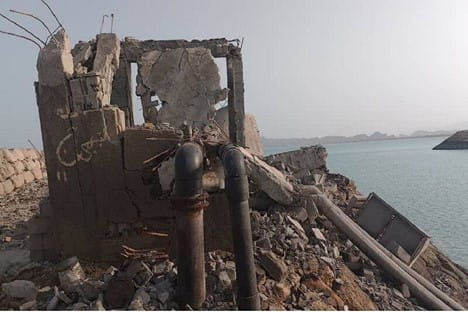

Images of the Jask water desalination plant after the July 2026 attack: IRNA source
These attacks occurred in the southern regions of Iran, where the hot and dry climate and limited freshwater resources make water desalination facilities essential. Disrupting these facilities renders local communities vulnerable. From this perspective, attacks on water infrastructure in water-stressed regions have consequences far beyond direct damage to the facilities themselves. They can obstruct the realization of the right to sufficient, safe, and adequate water access and impede sustainable development.
Article 52(2) of Additional Protocol I to the Geneva Conventions states that the making of attacks, the destruction of property, or the removal or rendering useless of property is prohibited when made for the specific purpose of denying civilians objects indispensable to their survival. The article explicitly mentions water supply installations, water storage facilities, and irrigation systems (6). This prohibition is also considered a customary rule (7). Under the general obligations of international humanitarian law, water desalination facilities are considered civilian objects protected by the principle of distinction. Therefore, under the principles of proportionality and precaution, specific considerations regarding these facilities must be taken into account during attacks.
The protection of water infrastructure in armed conflicts is a human and environmental necessity. It also depends on adherence to international humanitarian law and the protection of the right to sufficient, safe, and adequate water. However, aggressors in the war against Iran disregarded these obligations, damaging infrastructure and disrupting the lives of Iranian citizens. This aggression, which began under the pretext of countering a threat to peace, instead targeted the lives of citizens and sustainable development in Iran.
References
- Ensure Availability and Sustainable Management of Water and Sanitation for All, https://globalgoals.org/goals/6-clean-water-and-sanitation/. Last Seen 19 October 2026.
- The Right to Water (arts. 11 and 12 of the International Covenant on Economic, Social and Cultural Right), (20 January 2003), E/C.12/2002/11, https://docs.un.org/en/e/c.12/2002/11.
- Reuters, Qeshm Island’s Desalination Plant Out of Service Since Early March Strike, (31 March 2026), https://www.reuters.com/business/environment/qeshm-islands-desalination-plant-out-service-since-early-march-strike-2026-03-31/. Last Seen 19 October 2026.
- Araghchi, S. A. (2026, March 7). The U.S. committed a blatant and desperate crime by attacking a freshwater desalination plant on Qeshm Island [Post]. X. https://x.com/araghchi/status/2030285674528616916. Last Seen 19 October 2026.
- BBC, US Strikes Hit Iran for Seventh Consecutive Night, (18 July 2026), https://www.bbc.com/news/articles/cy748n8zx8ro, Last Seen 19 October 2026.
- Protocol I, Article 54, Protection of objects indispensable to the survival of the civilian population, https://ihl-databases.icrc.org/en/ihl-treaties/api-1977/article-54, Last Seen 19 October 2026.
- Customary IHL, Attacks against Objects Indispensable to the Survival of the Civilian Population, https://ihl-databases.icrc.org/en/customary-ihl/v1/rule54, Last Seen 19 October 2026.