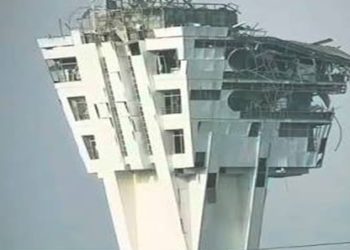
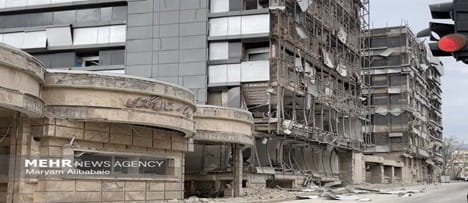
Amid the continuation of recent military strikes against Iran, one of the most alarming incidents has been the attack on Gandhi Hospital in Tehran, a medical facility that for years has provided specialized healthcare services to patients and their families.
According to preliminary information and field observations, a projectile struck the area surrounding the hospital, causing serious damage to parts of the main building and its medical infrastructure. The incident immediately created an emergency situation inside the hospital, forcing medical staff to urgently transfer patients, newborns, and other vulnerable individuals to safer areas.
At the time of the attack, Gandhi Hospital was hosting a significant number of patients, many of whom were dependent on life-saving medical equipment. As one approaches the scene, the impact of the blast becomes visible throughout the surrounding area. Broken windows, damaged walls, and structural cracks in nearby buildings indicate that the explosion affected not only the hospital but also parts of the surrounding residential neighborhood.
At the hospital entrance, several abandoned wheelchairs could be seen—an image that vividly reflects the chaos and urgency that followed the attack. Such scenes raise serious concerns about the situation of patients who were hospitalized at that moment, including individuals reliant on ventilators, dialysis machines, and other critical care equipment whose sudden relocation may have posed additional risks.
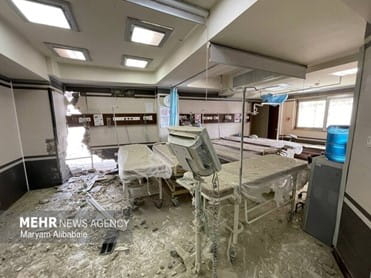
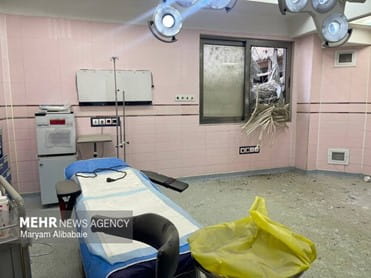
Field reports suggest that the blast wave affected multiple floors of the hospital building. Several sections—including the angiography unit, operating rooms, intensive care areas, cardiac surgery equipment, and other treatment facilities—sustained serious damage. In some areas, hospital beds were overturned or buried under debris, while critical medical devices were rendered inoperable. Many of these devices play a decisive role in sustaining life during medical emergencies.
Reports also indicate that the IVF and embryo storage facilities were damaged. These units are among the most sensitive parts of the hospital, where embryos are preserved under carefully controlled scientific conditions. Hospital staff reportedly attempted to transfer the remaining biological materials to freezing tanks in order to prevent their complete loss.
The damage was not limited to the main hospital building. Adjacent outpatient clinics and medical facilities connected to the hospital were also severely affected. These multi-story buildings hosted a range of specialized services, including physiotherapy, immunology, cardiology, nephrology, gastroenterology, and other outpatient medical care. The blast wave caused extensive destruction to medical equipment and treatment areas within these facilities.
As a result of the attack, the hospital’s medical operations were effectively halted, and the facility was eventually evacuated. The destruction of key infrastructure—including ventilation systems and other essential support services—made it impossible for the hospital to continue providing even basic medical care.
The humanitarian consequences extended beyond the hospital itself. Several nearby residential buildings were also damaged, forcing some residents to leave their homes. One local resident, seen collecting belongings from his damaged apartment, explained that shattered windows and structural damage had made it impossible for his family to remain there.
An attack on an active medical facility raises serious concerns under international humanitarian law. Established principles of the law of armed conflict emphasize that medical facilities and healthcare personnel must be afforded special protection and must not be targeted during military operations. Any strike that damages hospitals and healthcare infrastructure can have far-reaching humanitarian consequences, as such institutions play a critical role in protecting civilian lives.
The destruction of Gandhi Hospital has now become a stark symbol of the human consequences of war. A place that once represented care, recovery, and hope for patients has been transformed into a site marked by damaged wards, silent medical equipment, and interrupted medical services.
This incident underscores the urgent need to protect civilian infrastructure—especially healthcare facilities—during armed conflict, and highlights the importance of continued international attention to the humanitarian consequences of such attacks.
Tehran – March 2026