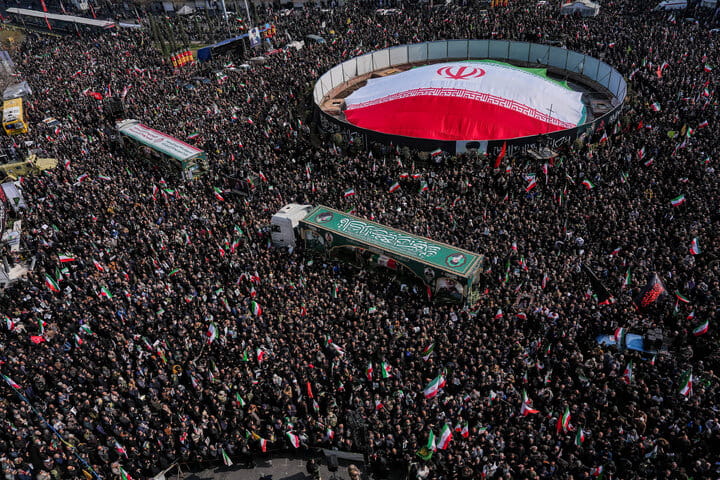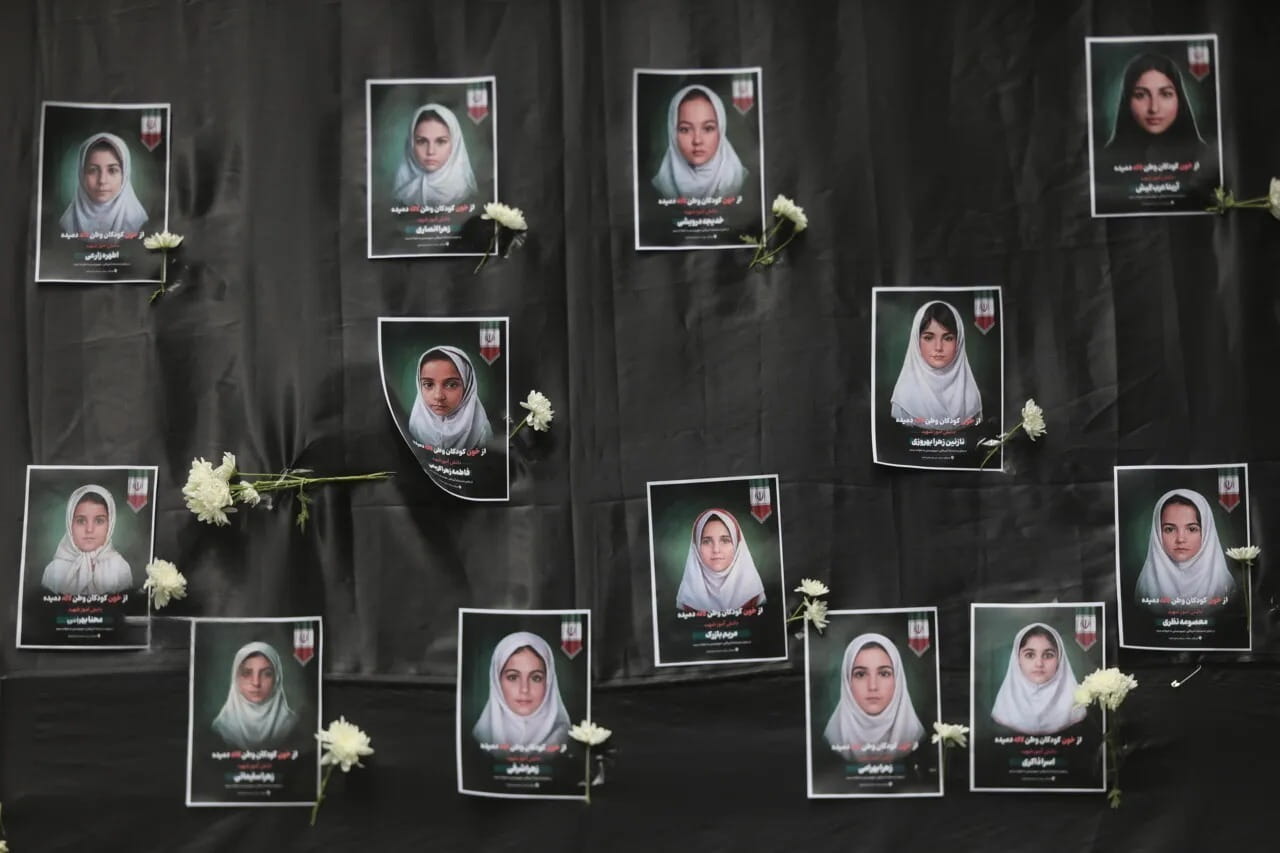
According to official data released by the Head of Iran’s Forensic Medicine Organization, a total of three thousand three hundred and seventy-five civilians were martyred during the recent imposed war perpetrated by the United States and the Zionist regime. A detailed age-based statistical breakdown of the martyrs reveals not random collateral damage, but a pattern of systematic, indiscriminate, and disproportionate attacks on a civilian population. This report provides a legal and analytical interpretation of the data.
- Total Casualties and Legal Context
The total of three thousand three hundred and seventy-five martyrs represents, in itself, a significant civilian death toll. Under Article 51 of Additional Protocol I to the Geneva Conventions, indiscriminate attacks are those which strike military objectives and civilians without distinction. The age distribution presented below strongly suggests that the attacking forces failed to adhere to the principle of distinction—a cardinal principle of international humanitarian law (IHL) and a grave breach amounting to a war crime under the Rome Statute of the International Criminal Court (Article 8).
- Age Category Analysis and Violations
- Infants Under One Year – Seven Martyrs
The presence of seven infants under one year of age among the martyrs is legally significant. Infants have no independent mobility, no capacity to pose any threat, and no connection to any military activity. Their deaths can only occur through one of the following: direct targeting of residential homes, use of explosive weapons with wide-area effects in populated neighborhoods, or complete failure to verify targets. Each of these constitutes a violation of the principle of precaution (Article 57, Additional Protocol I). The killing of seven infants is prima facie evidence of disproportionate or direct attacks on civilian dwellings.
- Children Aged One to Twelve Years – Two Hundred and Fifty-Five Martyrs
Two hundred and fifty-five children in this age range were martyred. Under the United Nations Convention on the Rights of the Child (CRC), ratified by nearly every nation, Article 38 requires warring parties to respect and protect children in armed conflicts. Furthermore, the Optional Protocol to the CRC on the involvement of children in armed conflict reinforces that children are non-combatants by definition. The death of two hundred and fifty-five young children indicates either deliberate targeting of schools, homes, or playgrounds, or the use of explosive weapons in residential zones without any regard for child safety. Both scenarios are grave breaches of IHL.
- Adolescents Aged Thirteen to Eighteen Years – One Hundred and Twenty-One Martyrs
While one hundred and twenty-one adolescents fall into a grey area under some domestic military laws, international law continues to protect them as civilians unless they are actively participating in hostilities. In the absence of evidence that these one hundred and twenty-one individuals were combatants—which the attacking forces have not provided—they must be presumed civilians. Their deaths therefore constitute additional violations of the principle of distinction.
- Young Adults Aged Nineteen to Thirty Years – Nine Hundred and Sixty-Nine Martyrs
The largest single group, nine hundred and sixty-nine martyrs, falls within the nineteen-to-thirty age bracket. This is the prime working, parenting, and community-building demographic. Even if some individuals in this age group could theoretically be considered combatants, the principle of proportionality (Article 51(5)(b) of Additional Protocol I) prohibits attacks where the expected military advantage is outweighed by incidental loss of civilian life. The sheer number of civilian deaths in this category—almost one thousand—suggests that even if military targets existed, the attacks were grossly disproportionate. Moreover, the lack of distinction suggests that entire residential areas were treated as military objectives, which is unlawful.
- Adults Aged Thirty-One to Forty Years – Seven Hundred and Ninety-Two Martyrs
Seven hundred and ninety-two martyrs in this age group represent parents of young children and active members of the workforce. Under IHL, the cumulative effect of killing nearly eight hundred adults in this category constitutes collective punishment of a civilian population, which is explicitly prohibited under Article 33 of the Fourth Geneva Convention. The destruction of a generation of parents leaves behind hundreds of orphaned children and destitute families.
- Adults Aged Forty-One to Fifty Years – Six Hundred and Thirty-Nine Martyrs
Six hundred and thirty-nine martyrs in this age range further reinforce the pattern of indiscriminate attacks. Individuals in their forties are overwhelmingly civilian in character—teachers, doctors, farmers, merchants. Their deaths, in such high numbers, indicate a systematic failure to distinguish or a deliberate policy of maximum civilian harm.
- Older Adults Aged Fifty-One to Sixty Years – Two Hundred and Sixty-Seven Martyrs
Two hundred and sixty-seven martyrs in this category are individuals who are grandparents in most societies. Under IHL, age does not diminish civilian protection. The killing of this many older adults is consistent with the use of wide-area explosive weapons in densely populated residential neighborhoods without effective warning or evacuation.
- Elderly Aged Sixty-One to Seventy Years – One Hundred and Sixty-Three Martyrs
One hundred and sixty-three martyrs in their sixties and seventies are indisputably non-combatants. International humanitarian law grants them absolute protection. Their deaths can only be explained by direct attacks on civilian homes or by indiscriminate bombardment of residential districts.
- Elderly Aged Seventy-One Years and Above – Sixty Martyrs
Sixty martyrs aged seventy-one or older represent the most vulnerable segment of any population—often with limited mobility, dependent on care, and confined to their homes. Their presence among the dead is compelling evidence that no effective precautions were taken to distinguish between military targets and civilian residences. Under the Rome Statute, the intentional or reckless killing of elderly civilians in such numbers may constitute crimes against humanity.
III. Overall Statistical Pattern and Legal Conclusion
When viewed as a whole, the age distribution of the three thousand three hundred and seventy-five martyrs reveals a near-perfect representation of a normal civilian population—from infants under one year to the oldest elderly. No age group was spared. This demographic spread is inconsistent with targeted military operations against legitimate combatants, who would overwhelmingly fall within a narrow age range (typically late teens to forties) and would not be found in residential homes surrounded by infants, young children, and the elderly.
The data instead supports the following conclusions:
- Violation of Distinction: The attacking forces failed to distinguish between combatants and civilians, treating entire residential neighborhoods as military objectives.
- Violation of Proportionality: Even if some military objectives existed in the area, the incidental loss of three thousand three hundred and seventy-five civilians—including infants, children, and the elderly—was grossly disproportionate to any conceivable military advantage.
- Violation of Precaution: No effective advance warning was given to civilians, nor were feasible precautions taken to verify that targets were not civilian in nature.
- Potential Crimes Against Humanity: The systematic and widespread killing of civilians across all age groups may constitute crimes against humanity under Article 7 of the Rome Statute, particularly if shown to be part of a state policy.
- Call to Action
Based on this analysis, the international community is urgently called upon to:
- Recognize the age-classified data as prima facie evidence of war crimes and crimes against humanity.
- Demand that the International Criminal Court open a formal investigation into the killing of three thousand three hundred and seventy-five Iranian civilians, disaggregated by the age categories presented.
- Refer the documented deaths of seven infants, two hundred and fifty-five young children, and two hundred and twenty-three elderly individuals to the UN Special Rapporteur on extrajudicial, summary or arbitrary executions.
- Impose targeted sanctions on commanders and political leaders of the United States and the Zionist regime who ordered or authorized the attacks that resulted in this age-distributed civilian death toll.