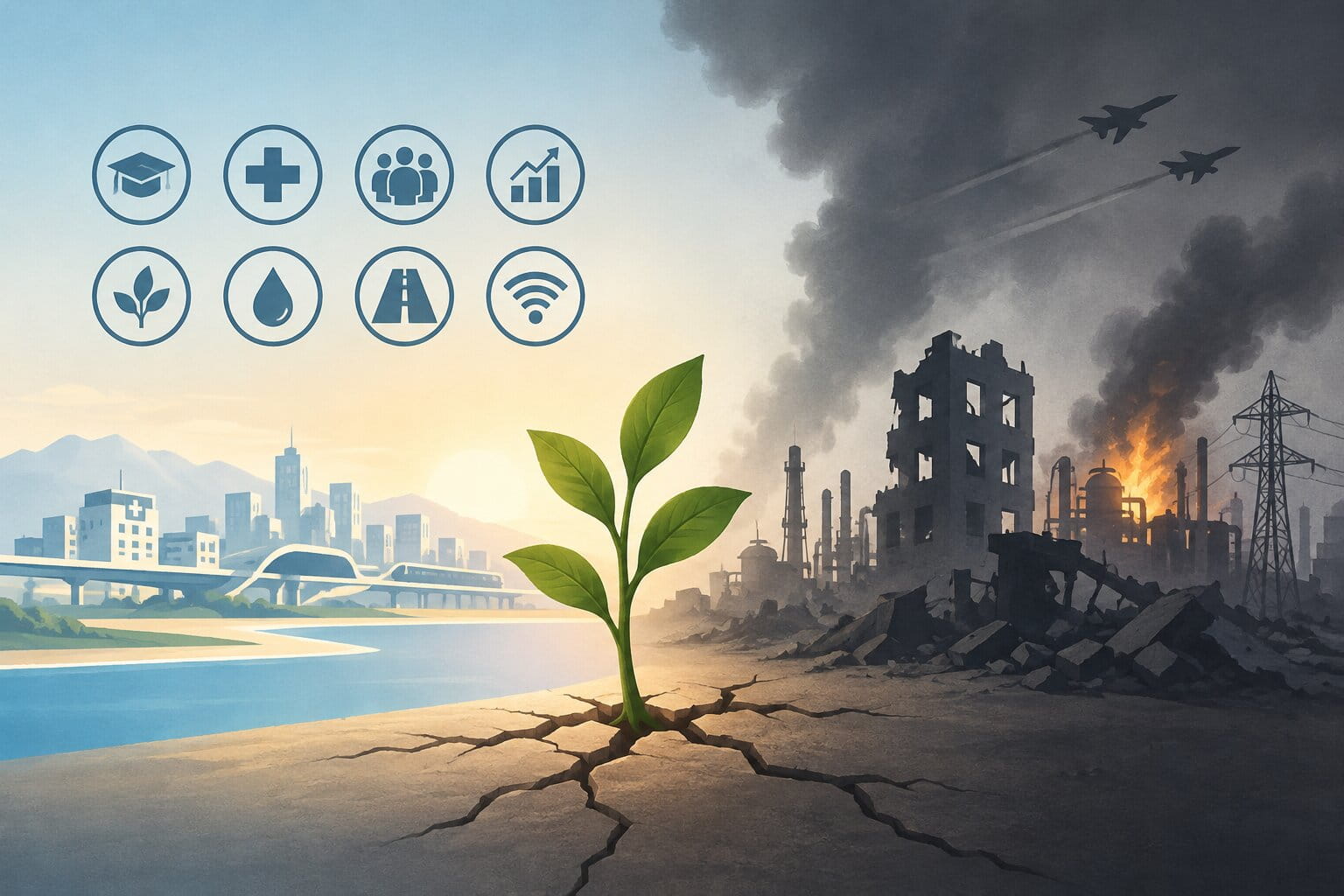
The right to development is not limited to economic growth. According to Article 1 of the Declaration on the Right to Development (1986), the right to development is an inalienable human right by virtue of which all human persons and peoples are entitled to participate in, contribute to, and enjoy economic, social, cultural, and political development, in which all human rights and fundamental freedoms can be fully realized (1). States have the primary responsibility for creating national and international conditions favorable to realizing the right to development, in accordance with the principles of friendly relations and cooperation in international law (2). Within this framework, States and groups of people must not create obstacles; instead, they should remove existing and potential impediments in line with international standards. The concepts of the right to development and sustainable development entered the literature of international law in the 1970s. However, their historical roots can be traced to instruments such as the International Covenant on Economic, Social and Cultural Rights. This covenant enumerates rights like health, education, food, and quality of life, the realization of which is considered a fundamental component of human development. Similarly, the right to self-determination, a common principle of both that Covenant and the International Covenant on Civil and Political Rights, reinforces the collective dimension of the right to development by emphasizing the freedom of peoples to determine their political status and pursue their economic, social, and cultural development.
Development does not depend solely on factors such as resources, geography, population, knowledge and technology, or the type of political system. Rather, the quality of international relations, cooperation among states, and, most importantly, the state of domestic and international peace and security also play a decisive role. War and the threat of war are among the most significant factors that can disrupt the development trajectory of countries and, within a short time, jeopardize the economic, social, and human achievements of decades of effort. Peace and security have a reciprocal relationship with development. Underdevelopment can lead to humanitarian and ethnic crises, war, and internal violence (as in the societies of the Congo and Sudan), and thereby threaten peace and security. In the opposite direction, too, the absence of peace and security deprives societies of opportunities for development. Peace is not merely the absence of war; nevertheless, war is one of the most prominent instances of a breach of international peace and security. War threatens development not only while it lasts; its consequences continue to overshadow development long afterward.
When we speak of the impact of war on resources, natural resources are often the first thing that comes to mind. The sovereignty of peoples over their national wealth and natural resources is a well-established principle of the international order. In a country where access to resources is vital and the economy depends on them—such as oil and gas—war can affect economic capacities and public revenues by disrupting the extraction, refining, storage, and transport of these resources.
However, the consequences of war extend beyond reduced production or the loss of economic value from resources. The destruction of oil and gas facilities, coupled with fires, oil spills, and the release of pollutants, can lead to wasted natural resources, widespread pollution of water, soil, and air, and the destruction of entire ecosystems. In addition to economic losses, this damage also threatens public health and the livelihoods of local communities, including fishermen and residents of coastal areas. During the Persian Gulf War of 1990–1991, the burning of hundreds of oil wells in Kuwait and the widespread release of pollutants, together with oil spills into marine and terrestrial environments, caused considerable environmental damage. During the 2026 war of the United States and Israel against Iran, the attack on oil depots in Tehran led to the waste of resources and widespread air pollution (3), and through this extraordinarily destructive act, the right to health of the citizens of Tehran was directly targeted. Moreover, the waste of natural resources and environmental destruction completely contradict the principle of sustainable development, which emphasizes balancing the developmental and environmental needs of present and future generations (4).
One important keyword linked to the right to development is infrastructure. Critical infrastructure refers to the assets, facilities, systems, and physical and virtual networks whose continued operation is fundamental to safeguarding national security, economic stability, public health and safety, the continued provision of essential services, and the performance of essential state and societal functions. Their destruction, incapacitation, or serious disruption could have far-reaching and cascading national and societal consequences. This definition is also consistent with the approach of the United States Cybersecurity and Infrastructure Security Agency (CISA) (5). An attack on a country’s infrastructure not only constitutes a violation of international humanitarian law (a breach of the principle of distinction) but also undermines the enjoyment of the right to development. Infrastructure is regarded as a symbol of a country’s development; without it, the ability of groups of people to enjoy the right to development, and even other fundamental rights such as economic and social rights, is obstructed and may well become impossible.
Development does not depend solely on factors such as resources, geography, population, knowledge and technology, or the type of political system. Rather, the quality of international relations, cooperation among States, and, most importantly, the state of domestic and international peace and security also play a decisive role. Electricity transmission lines and high-voltage substations were also damaged, and as a result, even the electricity generated in some areas could not be easily transmitted. The effects extended to the supply of drinking water and to the medical services provided by hospitals (6).
During the war against Iran, energy infrastructure (power plants, electrical substations, refineries, petrochemical industries, and gas facilities), industrial infrastructure (factories and steel plants), healthcare infrastructure (hospitals and pharmaceutical production centers), communications and transport infrastructure (airports, railway lines, highways, and bridges), and water supply infrastructure were directly attacked. These attacks had serious consequences, including power outages, water and fuel shortages, and trade disruptions. They also raise legal questions concerning the targeting of civilian facilities, and have been the subject of reports and analyses by The Washington Post and Al Jazeera (7)(8).
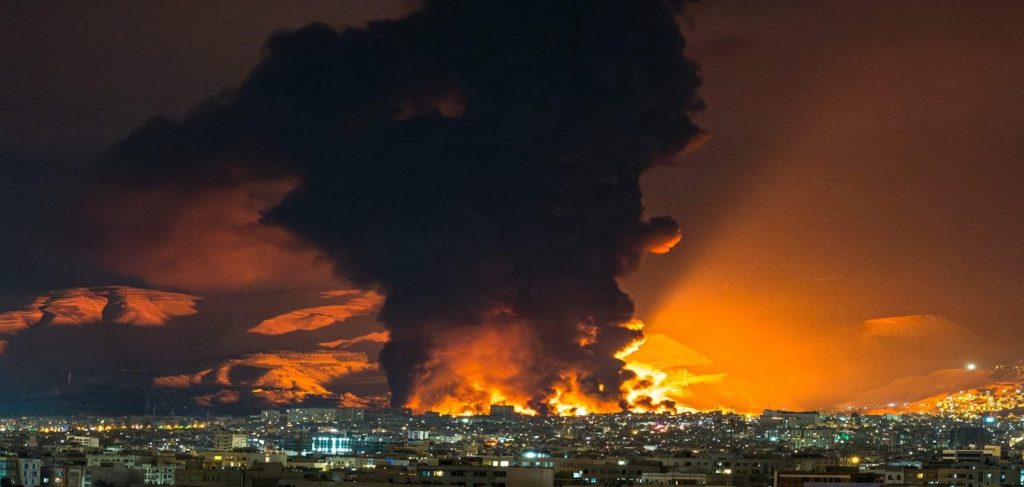
Tehran after the attack on the oil depot. Photo source: Al Jazeera
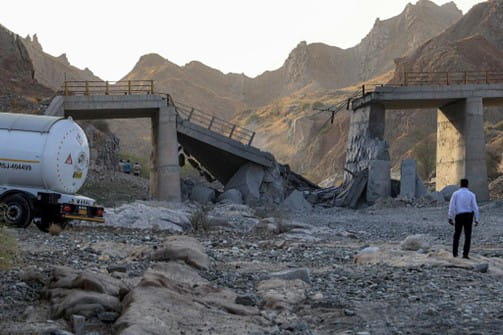
Attack on Iran’s bridges. Photo source: Associated Press
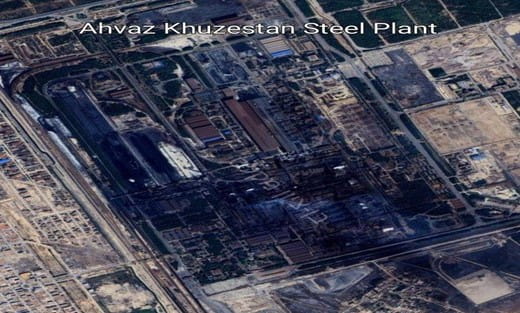
The consequences of destroying critical infrastructure extend beyond direct physical damage. Disruptions to the supply of energy, water, transport, and communications can reduce economic activity, disrupt supply chains, restrict access to public services, and jeopardize the continued operation of industrial, manufacturing, and medical facilities. In addition to disrupting people’s lives, the country’s public and financial resources are inevitably spent on rebuilding infrastructure, compensating for economic losses, restoring essential services, and repairing the consequences. These are resources that could have been devoted to developing other sectors, including education, health, employment, technology, and other productive sectors. Moreover, the workforce employed in infrastructure faces the risk of unemployment and loss of job opportunities. The effects of the 2026 war on Iran take on added significance given that it coincided with restrictions arising from international sanctions, because the narrowing of the country’s economic resources and channels can make it more difficult to finance reconstruction, gain access to the necessary technology and equipment, and revive productive capacities, consequently extending the negative effects of the war from the period of hostilities to the years that follow.
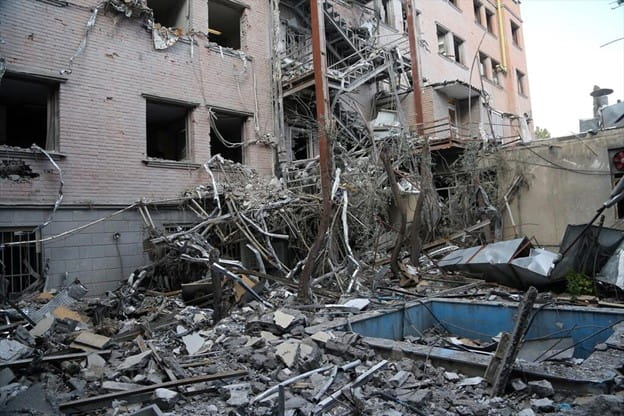
Image of the attack on the Pasteur Institute. Photo source: Euronews
Another important issue that must be taken into consideration is human resources. The reduction of human resources results either from direct casualties of enemy attacks or from the emigration of elites from the country. The elites of a society, in order to make use of their capabilities and develop their talents, may lose hope in the future and leave the country because of the insecurity and instability caused by war, or because of the climate of uncertainty created by the threat of war. As a result, the possibility of the country benefiting from their scientific and professional capacities is lost.
Likewise, one of the important pathways to development is attracting foreign investment and expanding relations with international actors. War, or a situation threatening the use of force against a country, severely affects the incentive to invest in its various economic sectors and creates an uncertain environment.
Respect for the rules of international humanitarian law, refraining from targeting civilian objects and critical infrastructure, and compliance with the prohibition on the use of force are among the legal requirements related to safeguarding the developmental capacities of peoples. During the 2026 war against Iran, the violation of these rules and obligations had adverse consequences for Iranian society or created the risk of such consequences—consequences that, despite the claims of the aggressing parties that they were supporting the Iranian people and respecting their rights, affected various dimensions of the country’s economic, social, and human life. From this perspective, the effects of war on the right to development cannot be reduced merely to economic losses or the physical destruction of assets; the fundamental issue is the continuing weakening of the material, human, and institutional capacities necessary for individuals and peoples to enjoy economic, social, and cultural rights and to participate effectively in the process of development.
- Declaration on the Right to Development. (1986). GA 41/128. https://www.ohchr.org/en/instruments-mechanisms/instruments/declaration-right-development. Last Seen 11 October 2026.
- Ibid
- The Guardian. (2026). Tehran’s toxic cloud: satellite images show oily fires burned for days. https://www.theguardian.com/world/2026/mar/23/tehran-toxic-cloud-satellite-image-oil-fires. Last Seen 11 October 2026.
- Rio Declaration on Environment and Development. (1992). https://digitallibrary.un.org/record/141565?v=pdf. Last Seen 11 October 2026.
- Learn: What are dependencies and why should I care? https://www.cisa.gov/topics/critical-infrastructure-security-and-resilience/resilience-services/infrastructure-dependency-primer/learn. Last Seen 11 October 2026.
- World Bank. (2003). United Nations/World Bank Joint Iraq Needs Assessment: Electricity. https://documents1.worldbank.org/curated/en/175061468038657723/pdf/315370IQ0ELECTRICITY01public1.pdf. Last Seen 11 October 2026.
- (2026). What are ‘civilian’ sites in international law and where have US, Iran hit?. https://www.aljazeera.com/news/2026/7/20/what-are-civilian-sites-in-international-law-and-where-have-us-iran-hit. Last Seen 11 October 2026.
- Washington post. (2026). Trump’s Infrastructure Strikes Leave Iran’s Economy Battered. https://www.washingtonpost.com/world/2026/07/31/trumps-infrastructure-strikes-leave-irans-economy-battered/. Last Seen 11 October 2026.